Phlebotomy Technician Training in Connecticut
Earn your NHA Certified Phlebotomy Technician (CPT) credential in as little as 2 weeks.
- 80-Hour Hybrid Program
- NHA CPT Exam On-Site
- WIOA Funding Eligible
Questions? Call (203) 391-6766, Monday–Friday, 8am–5pm.
90%+
NHA CPT pass rate, 2025 phlebotomy curriculum
1,500+
Phlebotomists trained since 2018
5★
Google rating
CT OHE-approved
NHA-approved instructors
*Pass rate based on NHA CPT results for students in our 2025 phlebotomy curriculum.
Course duration
2 weeks (day) or 4 weeks (evening)
Total hours
80 hours: 56 online + 24 hands-on lab
Format
Hybrid: live Zoom classes + in-person labs
Tuition
$1,200 tuition · $1,620 program total
Certification
NHA Certified Phlebotomy Technician (CPT)
Lab campuses
Stamford · New Haven (Woodbridge) · Waterbury (Middlebury) · Hartford (East Hartford)
Program Overview
Northeast Medical Institute’s Hybrid Phlebotomy Technician program is an 80-hour phlebotomy course that teaches the technical and procedural skills of blood specimen collection and venipuncture. You’ll learn the theory live on Zoom with an instructor, then practice real blood draws in our hands-on labs.
Our day program finishes in as little as 2 weeks, which makes it the only 2-week hybrid phlebotomy program in Connecticut. Evening students finish in 4 weeks. On the last day of lab, you take the National Healthcareer Association (NHA) Certified Phlebotomy Technician (CPT) exam on-site.
We’ve trained phlebotomists across Connecticut and New York. Our lab campuses serve Stamford, New Haven, Hartford and Waterbury, and nearby towns throughout Fairfield, New Haven, Hartford and Litchfield Counties. If you’ve been searching for a blood draw school or phlebotomy classes in CT, you can start here.
Topics covered: Introduction to Phlebotomy & Infection Control · Legal Issues in Healthcare · Introduction to Human Anatomy & Physiology · Medical Terminology · Phlebotomy Equipment & Supplies · Phlebotomy Procedures I & II · Phlebotomy Fundamentals
Hybrid Phlebotomy Training: How It Works
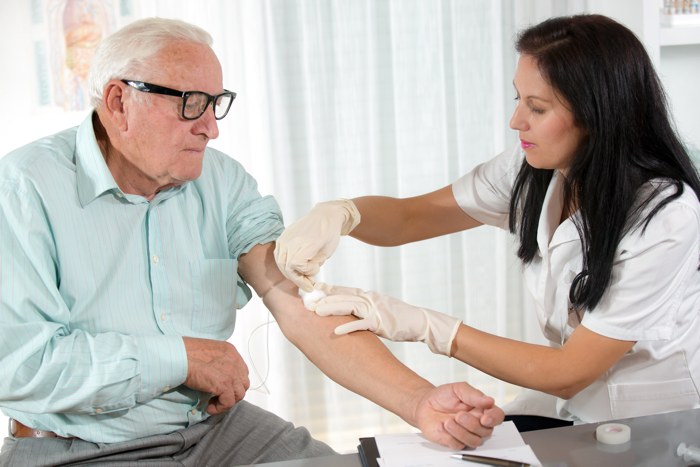
About 70% of the class is taken from home with a live instructor. The hands-on part happens in our campus labs.
Enroll and choose your schedule.
Register online and pick the day (2 weeks) or evening (4 weeks) program. Requirements: age 18+ with photo ID, a computer or tablet for Zoom, and English proficiency.
Learn online, live on Zoom (56 hours).
Attend live classes with your instructor. You’ll cover the textbook Phlebotomy Essentials, 8th Edition, the NHA study modules, chapter quizzes and a class final. Quizzes and tests are taken on a computer.
Practice in the lab (24 hours).
Go to your campus for 3 lab days (day program) or 4 lab sessions (evening). You’ll practice on classmates first, then on volunteers you bring. You finish with 25 venipunctures, 5 butterfly draws and 10 capillary (finger) sticks.
Take the NHA CPT exam on-site.
On your final lab day you take the NHA Certified Phlebotomy Technician exam at the campus: 120 questions, up to 2 hours.
Start your career.
Apply for phlebotomy jobs at hospitals, labs, doctors’ offices, blood banks and patient service centers. You can also continue into our Patient Care Technician or EKG Technician program.
What You’ll Learn
Curriculum
Our phlebotomy curriculum follows the NHA CPT test plan. By the end of the course you’ll be able to identify and perform:
Day-by-Day Outline
| Day | Format | Topics |
|---|---|---|
| 1 | Zoom | Patient interaction and communication, healthcare settings, lab services, quality assurance, legal issues, HIPAA and bloodborne pathogens |
| 2 | Zoom | Infection control, chemical safety, first aid, anatomy and physiology, body systems, blood types |
| 3 | Zoom | Blood collection equipment and additives, order of draw, venipuncture steps, patient preparation |
| 4 | Zoom | Reference ranges, basal state, patient complications, capillary puncture |
| 5 | Zoom | Special collections, point-of-care testing, blood bank and donation, coagulation and glucose tests |
| 6 | Zoom | Quality control, specimen handling and processing, non-blood specimens, labeling |
| 7 | Zoom | NHA exam review, 200-question practice test, class final |
| 8 | Lab | Supplies and setup, finger sticks, first live venipunctures on classmates |
| 9 | Lab | Butterfly (winged infusion) draws, volunteer draws |
| 10 | Lab | Final volunteer draws, NHA CPT exam |
Evening students cover the same content. Each day above is split across 2 evenings.
Requirements
Clinical/Lab Requirements
Online-Only Phlebotomy Classes vs. Our Hybrid Program
Online-only phlebotomy courses teach the theory, but you can’t learn to draw blood through a screen. To sit for the NHA CPT exam, you need 30 venipunctures and 10 capillary sticks on real people. Most online-only programs leave you to find those on your own. Our hybrid program includes them.
Typical online-only program
- Self-paced videos and readings
- 3–12 months
- Practice arm kit at home
- You find your own site or externship
- Rarely
- Schedule on your own at a testing center
- About $979–$2,200
- National only
Northeast Medical Institute hybrid
- Live Zoom classes with an instructor
- 2 weeks (day) or 4 weeks (evening)
- 24 hours of in-person labs
- Included, done on campus with your instructor
- Every stick, in small-group labs
- Taken on-site on your last lab day
- $1,620 total
- Instructors who work in Connecticut healthcare
Online-only figures are typical ranges from national online phlebotomy programs, Sept 2026.
Class Schedule
Day and Evening Programs
Choose the schedule that fits your life. Both programs cover the same curriculum, combining live Zoom classes with hands-on campus labs.
Day Program
Full-time · Fastest path to certification
Length
2 weeks
Days
Monday–Friday
Hours
8:00am–4:30pm
Zoom starts 8:30am
Online
7 days on Zoom
Labs
3 lab days
Starts
New classes start monthly
Evening Program
Part-time · Keep your day job
Length
4 weeks
Days
Monday–Friday
Hours
5:00pm–9:30pm
Zoom starts 6:00pm
Online
16 evenings on Zoom
Labs
4 lab sessions
Starts
Rolling schedule
Labs run at the campus you choose when you register. If fewer than 4 students are enrolled at your campus, your lab moves to the next closest campus.
Phlebotomy Classes Near Me
Take the online part of our phlebotomy course from anywhere in Connecticut. Then come to one of our 4 phlebotomy lab campuses for hands-on training. Enter your ZIP code to find your closest lab.
Tuition and Program Cost
Phlebotomy certification cost at Northeast Medical Institute is among the lowest in Connecticut, and your lab coat is included free.
Total Program Cost
$1,620
Tuition, supplies, e-book and registration — all in one price.
Not Included
- NHA Phlebotomy (CPT) exam — $137.19, paid to NHA when you register
- HPSO student liability insurance — $25 (required)
- PPD/TB test — about $25–$50
- Optional paperback textbook — $80
Ways to Pay
Payment plans are available, and your balance must be paid in full by Day 5 of class. WIOA funding may cover the full cost for eligible students.
Course Documents
How to Enroll
Pick your campus and schedule.
Use the Campus Finder to choose your lab campus, then select the day or evening program.
Register online.
Pay the $256.75 registration fee to hold your seat. Classes are kept small, so seats fill fast.
Get your paperwork ready.
Get a PPD (TB) test and your Hepatitis B vaccination record, and buy HPSO insurance ($25).
Start class.
Log into your first live Zoom class. Your balance is due by Day 5.
NHA CPT Certification
When you finish our phlebotomy technician training, you’re prepared to sit for the National Healthcareer Association (NHA) Certified Phlebotomy Technician (CPT) exam. It’s one of the most widely recognized phlebotomy technician certifications in the U.S.
CPT
Certified Phlebotomy
Technician Certification

What to know about the exam
- Exam taken on-site at your campus on your final lab day
- 120 questions, 2 hours
- Passing score: 390 (scaled)
- Eligibility: high school diploma or GED, plus completion of our 80-hour course with 30 venipunctures and 10 capillary sticks
Graduation requirement: Registering for the NHA exam is required to graduate. Your diploma is issued once your registration is submitted.
Certified Phlebotomy Technician (CPT)
Eligibility: high school diploma or GED + our 80-hour course with 30 venipunctures and 10 capillary sticks.
Hands-On Lab Requirements
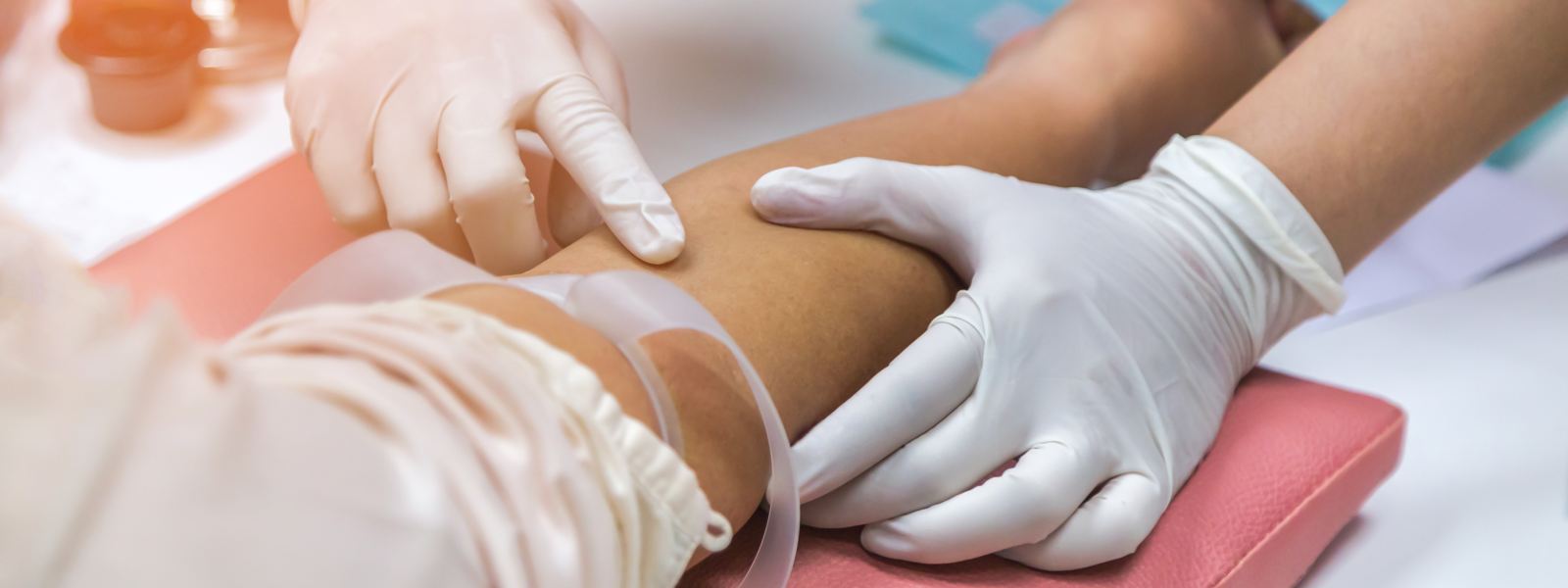
To graduate, you must successfully complete:
Required Skills

Before & During Lab
Bring volunteers
You’ll need 4–5 volunteers for lab, and you’ll also volunteer yourself. Your instructor will tell you which days and times.
Before lab
Turn in a negative PPD (TB) test and your Hepatitis B vaccination record.
What to wear
Scrub top and bottoms, your lab coat and closed-toe shoes.
What to bring
Photo ID, notebook, pen and highlighters. The e-book is accessed online.
What Does a Phlebotomist Do?
Collect blood samples with precision
Verify patient identity at every stage
Label vials accurately
Assess whether a patient can safely undergo a draw
Explain procedures clearly and calmly
Perform point-of-care tests such as blood glucose
Prepare specimens for lab testing
Maintain medical equipment

Career Outlook and Salary in CT
Phlebotomists are in demand. The U.S. Bureau of Labor Statistics projects 7% job growth from 2025 to 2035, with about 18,000 openings each year. The national median pay is $45,230 per year (May 2025) (BLS). In Connecticut, phlebotomists earn a median of $45,820 a year ($22.03 an hour), and the top 10% earn $59,730 or more. About 1,630 phlebotomists work in the state (BLS, May 2025).
Phlebotomy Technician
Laboratory Assistant
Laboratory Specimen Processor
Who Should Attend?
High school seniors and college students
Planning on becoming an RN or LPN? Get clinical experience before college. Our phlebotomy course covers everything you need for blood draws in just two weeks, without a lengthy degree program.
Career changers
Get your foot in the door in the medical field with a national certification. Then advance to our Patient Care Technician training.
Unemployed or underemployed
You may qualify for WIOA funding. We also offer payment plans.
Phlebotomy + CNA + EKG = Patient Care Technician
Phlebotomy is one of the three skills hospitals look for in a Patient Care Technician (PCT). Take them one at a time or all together, then sit for the NHA Certified Patient Care Technician (CPCT/A) exam.
Certified Nurse Aide (CNA)
Hybrid self-paced · $1,200 tuition
- Patient care, vitals & safety
- CT DPH state exam prep
- Online theory + campus lab/clinical
Phlebotomy Technician
80 hours · 2 or 4 weeks · $1,200 tuition
- Venipuncture, butterfly & finger sticks
- 40 live sticks in lab
- NHA CPT exam on-site
- About the CPT certification
EKG Technician
24 hours · 3 days · $250 tuition
- 12-lead placement
- Rhythm strip basics
- Live EKGs on classmates
Patient Care Technician (PCT)
206 hours · $2,560 tuition
- Combines all three programs
- Includes clinical hours
- NHA CPCT/A exam
Starting from scratch?
Enroll in the full PCT program. You'll complete CNA, Phlebotomy and EKG in one plan.
Already a CNA?
If your Connecticut CNA certification is valid and active, you only need Phlebotomy and EKG to finish your PCT.
Already took Phlebotomy?
You only need CNA and our 3-day EKG course to complete your PCT. Your phlebotomy course must be within the last 2 years.
Hours and tuition from current Northeast Medical Institute program pages. Tuition shown is tuition only; fees, books and exams are extra.
Why Choose Northeast Medical Institute
CT’s only 2-week hybrid program
Finish the day program in 2 weeks.
Live instructors, not videos
Every Zoom class is taught live.
Real hands-on practice
40 live sticks before you graduate.
Certification on-site
Take the NHA CPT exam at your campus on your last lab day.
4 lab campuses
Stamford, Woodbridge, Middlebury and East Hartford.
Affordable
$1,620 total, WIOA eligible, payment plans available.
5 Qualities of a Great Phlebotomist
Meet Your Phlebotomy Instructors
You’ll learn from working healthcare professionals, not recorded videos. Our phlebotomy instructors teach every Zoom class live and run every lab in person, so the person who teaches you the order of draw is the same person who checks your first venipuncture.
Nellie R., CPT
- 15+ years of phlebotomy experience
- NHA-approved · CT OHE-approved
- Teaches at all 4 lab campuses
Brittany F., CPT
- 7+ years of phlebotomy experience
- NHA-approved · CT OHE-approved
- Teaches at all 4 lab campuses
What sets our instructors apart
Still working in healthcare
Many of our instructors still work in Connecticut hospitals, labs and long-term care, so you learn how blood is drawn on the floor today, not how it was done 10 years ago.
Nurse-led program
Our phlebotomy and CNA programs are overseen by a Registered Nurse Director of Education.
Taught to the NHA test plan
Every lesson lines up with the NHA CPT exam, and every student takes a 200-question practice exam before test day.
Small labs, real coaching
Our labs are smaller than most phlebotomy schools, so your instructor watches every stick.
Live, not recorded
Every Zoom class is taught live, with time for questions.
Career mentors
Instructors help with references, resume tips and what employers look for in a new phlebotomist.
What Our Phlebotomy Graduates Say
Related Programs
Pair phlebotomy with CNA and EKG to become a Patient Care Technician.

Certified Nurse Aide (CNA)
Learn patient care, vitals and safety with online theory plus campus lab and clinical, and prepare for the CT DPH state exam.
- Self-paced
EKG Technician
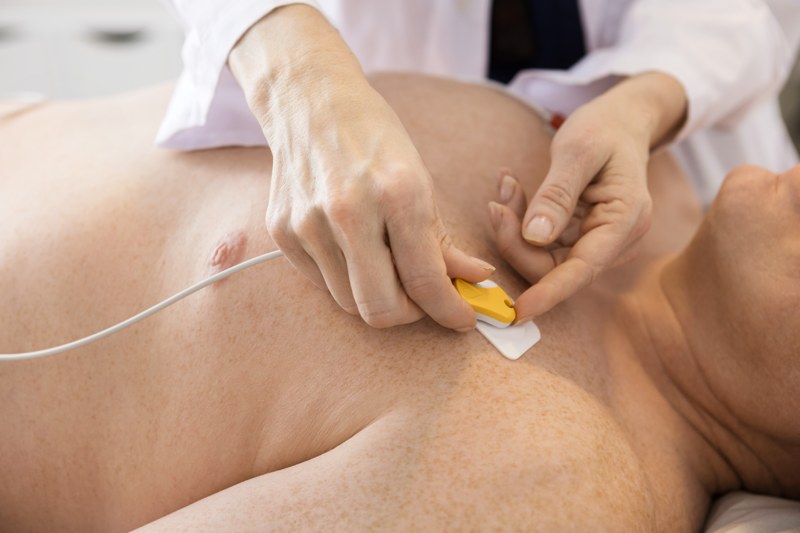
Learn 12-lead placement and rhythm strip basics, and run live EKGs on classmates.
- 24 hours
Patient Care Technician (PCT)
Combines CNA, Phlebotomy and EKG with clinical hours, and prepares you for the NHA CPCT/A exam.
- 206 hours
CPR/BLS
BLS and Heartsaver CPR courses through Code One Training Solutions — a credential most healthcare employers require.
- AHA certification card
Frequently Asked Questions
Becoming a phlebotomist in CT
Is a Phlebotomist the same as a medical lab technician?
Phlebotomists and medical lab technicians have a lot in common, but they are not the same. Both are responsible for collecting and analyzing blood samples, with lab technicians often needing to conduct further tests on the samples. However, lab technicians have broader responsibilities than phlebotomists – lab techs may be expected to manage inventory, prepare lab specimens and materials, prepare blood samples, or even interpret test results. Put simply: phlebotomists are specially trained to obtain a patient’s blood sample, while lab techs are more generalist practitioners who can do everything from preparing specimens for lab tests to interpreting the results. So if you’re asking what is a phlebotomist – their primary role is to draw and collect blood from patients for clinical lab testing. Looking to learn more about this topic visit our blog- What is Phlebotomy? Exploring Careers, Training, and Certification in 2023
The phlebotomy course
What will I learn in a Phlebotomy class?
In the Phlebotomy class at Northeast Medical Institute’s Daytime and Evening program, you will gain comprehensive knowledge and practical skills necessary in the field of Phlebotomy. The curriculum covers key topics such as anatomy and physiology, medical terminology, safety procedures, and proper lab techniques. Additionally, you’ll learn critical hands-on skills including venipuncture techniques, blood collection procedures, and patient interaction. The course combines classroom theory with practical lab work, preparing you to proficiently draw blood, handle and process specimens, and adhere to infection control standards. The program’s flexible schedule allows for both daytime and evening classes, catering to a variety of student needs and schedules.
How long does a Phlebotomy class last?
The Phlebotomy Technician Program at Northeast Medical Institute typically lasts for five weeks. The accelerated Phlebotomy program program is designed to accommodate busy schedules, with flexible options for both daytime and evening classes. The daytime classes are held Monday through Friday, while the evening classes are scheduled on weekdays, enabling students to balance their educational pursuits with other responsibilities. This short, intensive format enables students to gain the necessary skills and training efficiently, preparing them for quick entry into the medical field.
How long does it take to get my blood drawn at a Phlebotomy lab?
A phlebotomy procedure is a quick process, typically completed in just a few minutes. It involves locating a vein, drawing blood, and securely storing the sample for testing. At Northeast Medical Institute’s Phlebotomy School, we train our students to master the art of blood collection through a precise, step-by-step approach, ensuring accuracy and confidence in every draw.
Is Phlebotomy Class harder than CNA Training?
The difficulty of becoming a phlebotomist or Certified Nurse Aide (CNA) depends on the individual. Phlebotomy focuses on skill-specific tasks, such as drawing blood and understanding laboratory procedures, while CNA training covers overall patient care. Each field requires dedicated study and practice, but many students find phlebotomy training easier due to its specialized focus.
Cost and certification
What certifications do I need to become a phlebotomist?
To become a certified phlebotomist, you’ll need to successfully complete a fast phlebotomy certification program, like the one offered at Northeast Medical Institute. After completing the course, you’ll be eligible to sit for a nationally recognized certification exam. The most common certifying bodies include the National Healthcareer Association (NHA), American Society for Clinical Pathology (ASCP), and the National Phlebotomy Association (NPA). A certification demonstrates your competence and commitment to the field, possibly making you more attractive to potential employers. Note that certification requirements can vary by state, so it’s crucial to understand the regulations in your particular area.
Careers and locations
Where can I find Phlebotomy classes near me?
Northeast Medical Institute offers a comprehensive Phlebotomy Technician program in Connecticut. It is ideal for those who want to break into the medical field and are keen to learn essential skills. The Phlebotomy course provides extensive hands-on training, including practical lessons on how to draw blood and handle lab samples. Upon completion, you will be prepared for the National Phlebotomy Certification Exam, further enhancing your credentials in the medical field. The institute’s locations in Connecticut make it a convenient option for local residents in search of high-quality, accessible phlebotomy classes.
Online vs. hybrid and approvals
Why is Northeast Medical Institutes Hybrid Phlebotomy Program the best Phlebotomy program near me?
For those looking to join the phlebotomy profession, Northeast Medical Institutes phlebotomy classes near you might just be the right avenue. The phlebotomy program includes everything needed to become a phlebotomist – comprehensive training on all medical terminologies, understanding of the circulatory system, knowledge of phlebotomy equipment, practice in drawing blood, information on laws and regulations related to phlebotomy and safety measures for dealing with hazardous bodily fluids. With Northeast Medical Institute phlebotomy training near you, you can gain essential skills as well as an accredited National Health Career Association Phlebotomy Technician certification to pursue your career goals.
- Classes start monthly
Start Your Phlebotomy Career in as Little as 2 Weeks
Classes start monthly. Our classes are smaller than most phlebotomy schools, so your instructor watches every stick.